
Native to the Indian subcontinent and Central Asia, cannabis has long been prized by many cultures throughout human history for its varied applications such as its use as a fibre or a food source, its medicinal value and its psychoactive properties as utilised for religious ceremony and recreational purposes. Evidence within written historical records indicates instances of cannabis utilisation tracing as far back as the third millennium BC whilst archaeological finds from Japan suggest this date can be pushed as far back as 8,000 BC (Long, Wagner, Demske, Leipe, & Tarasov. 2017). From here it’s easy to trace cannabis’ journey as its usage spread outwards to eventually encompass the globe. Being the slight history geek that I am, I could happily go on about Assyrians and Aryans or Thracians, Dacians and Scythians and how the remnants of each civilisation attests to the consumption of cannabis within these societies (Cunliffe. 2001) or explain how the nuances of trade routes and the onset of the European predilection for empire saw this shrub reach the southern tip of Africa and the New World, but that’s best left for Tony Robinson.

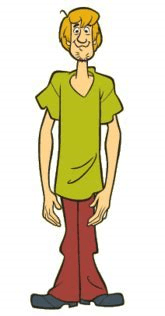
What I do want to talk about is how, if mankind had utilised this plant for so long and in so many different ways, in little under two centuries, did it come to be controlled and ultimately prohibited globally and how did proponents of its use and its users come to be criminalised, stigmatised and identified with Shaggy from Scooby Doo?
Prior to the 19th century cannabis was a perfectly legal crop and while there had been isolated instances of its prohibition it wasn’t until 1800 and Napoleon’s invasion of Egypt that we see Western attempts to control its usage (Booth. 2015). By 1925 the forerunner of todays United Nations, the League of Nations, which was created in the aftermath of WW1 in the hope it would become a truly global institution, had enacted and revised the International Opium Convention to include cannabis (Manning. 2013) so when this edict was passed a domino effect occurred amongst its members as each sought to conform to its authority and obey its rulings. Legitimate authority and its figures tend to display highly discernible signs of status and power alongside representing an institution or office of some form, indeed studies by Bickman (1974) and Bushman (1984) found that not only did visible symbols of authority (such as a uniform) increase the likelihood of obedience, they can also heavily influence levels of compliance towards the orders of that authority, this is perhaps best evidenced in Milgram’s well-known and controversial 1963 study of obedience which demonstrated that, whilst participants may have felt internal conflict, it required little more than a man in a white coat and a few urgings by this figure to get 65% of participants in his study to administer (so they thought) a lethal dosage of electricity! Conformity is best described as the process of submitting to group pressure and can be reflected as a change in attitude or behaviour due to this pressure regardless of whether it is real or imagined and can manifest itself in three distinct ways; Internalisation, Identification and Compliance. Obedience relates to direct orders, often embedded in law, issued from authority that influence a social group or an individual to act in a manner that they may not have explicitly done without this directive, this is referred to as the agentic state where in essence we absolve ourselves of personal responsibility for these actions. Obedience often entails little more than public acquiescence whilst private opinions remain unaltered. Conformity though may involve a lasting change of attitudes and beliefs especially if it is line with the views of the majority, therefore creating an in-group of those who conform and an out-group of those who do not and if history has taught us anything it’s that when beliefs get involved conflict is not far away.
Conflict often starts with the negative attitude of prejudice and its cognitive component which is expressed as stereotyping, I mentioned Shaggy earlier as this cartoon character has become almost synonymous with the image of a cannabis user; an unkempt, unambitious slacker and while research has demonstrated that excessive, long-term usage may lead to amotivational syndrome most users will not experience this extreme (Pacheco-Colon,, Limia., & Gonzalez. 2018). Most will however have this bias attributed to them in some form or another. I can personally recall experiencing discrimination along these lines based on nothing more than my day off work was on a Tuesday (At the time I was a chef) and my appearance (I should perhaps state that my nickname is Shaggy, although age has long since robbed me of my hair), that my abuser was a lady of pensionable age indicates that by conforming to normative rules as she perceived them, she demonstrated an institutionalised bias towards me.

Now I’m nailing my flag to the mast when I say that it’s my opinion that cannabis, a plant, should not be controlled in any way, shape or form and to criminalise it is to say that nature is wrong. I am in favour of all its uses and can personally attest to its benefits when dealing with insomnia and joint pain, there is now a wealth of medical study into its medicinal, pain-relieving properties such as work undertaken in 2014 by Smith and Wagner. To me it seems like insanity not to utilise cannabis as a fibre source when research has demonstrated its viability as a renewable crop (Struik., Amaducci., Bullard., Stutterheim., Venturi., & Cromack., 2000) and I would be highly interested in seeing how much the UK spends per annum to police, prosecute and imprison its users; surely legalisation would not only save the public purse money with regards to this but would also generate a new industry sector and all the jobs and tax revenue that comes with it.
As the 21st century progresses, and attitudes evolve alongside scientific discovery, is it time to yet again rethink cannabis position within society or are our current laws in the UK correct regarding this plant?
 Who's Dope Now?